Skip to content

Spot Crypto ETFs Investor Overview

mm Alex Morgan 6 min read

Why Spot Crypto ETFs Matter

Five Key Takeaways

  1. The category is dominated by single-asset products—Bitcoin, Ether, and select newer listings—rather than diversified baskets.

  2. Many offerings are legally structured as exchange-traded products or trusts rather than '40 Act funds, affecting disclosures and investor protections.

  3. Fees remain a key differentiator, with legacy conversions often carrying higher sponsor fees than newer entrants.

  4. Cash-market trading friction still shows up as bid/ask spreads and occasional premiums or discounts to NAV.

  5. Staking-linked designs are now part of the U.S. menu for some assets, adding yield but also new operational and tax considerations.

Market Access and Custody

The modern starting point was the SEC's January 10, 2024 approval of rule changes allowing spot Bitcoin exchange-traded products to list and trade in the U.S. That decision made coin ETF exposure functionally similar to buying a stock: investors can route orders through standard brokers, use limit orders, and hold positions alongside equities and bonds.

Spot Ether products followed with spot Ethereum ETFs beginning U.S. exchange trading on July 23, 2024. From an investor's perspective, these funds track reference rates for their underlying asset and seek to reflect spot prices, net of fees and operating frictions.

The practical difference versus direct coin ownership is market access and custody: shares can be bought and sold intraday, but investors do not receive the underlying token, do not interact with smart contracts, and generally cannot transfer out to a wallet.

Size and liquidity tend to concentrate quickly in a small set of tickers, which matters for execution and tracking. On July 21, 2026, BlackRock's iShares Bitcoin Trust ETF (IBIT) reported net assets of $49,056,941,164, while BlackRock's iShares Ethereum Trust ETF (ETHA) reported net assets of $5,486,849,996.

For many traders, those scale dynamics translate into tighter spreads and deeper order books—though spreads can still widen sharply during crypto volatility or when U.S. markets are closed and crypto continues trading elsewhere.

Mechanically, a spot ETF works because authorized participants can create and redeem large blocks of shares, a process designed to keep market prices anchored near NAV. In stressed markets, that linkage can weaken temporarily: crypto prices move 24/7, but U.S. listings do not.

That gap is why spot products can trade at small premiums or discounts, especially around weekends, major macro headlines, or sudden crypto-specific breaks. The wrapper simplifies trading but does not always simplify tax reality.

Issuer disclosures commonly state an intent to be treated as a grantor trust for U.S. federal income tax purposes, with shareholders treated as owning a pro rata interest in the underlying asset. In practice, that means an ETF with cryptocurrency can generate specialized annual statements in addition to standard brokerage reporting.


Fee Structure and Cost Dynamics

Sponsor fees compound over time and influence how aggressively market makers quote

Fees are not a footnote in this category; they are the tracking error. IBIT lists a 0.25% sponsor fee, and ETHA lists a 0.25% sponsor fee, as shown in their issuer materials. At the other end of the spectrum, Grayscale's legacy conversion products continue to publish materially higher sponsor fees, including a 1.5% sponsor fee for Grayscale Bitcoin Trust (GBTC) and a 2.5% sponsor fee for Grayscale Ethereum Staking ETF (ETHE).

For long-horizon holders, these deltas compound significantly. For shorter-horizon traders, they still matter because they influence net asset drag and can affect how aggressively market makers quote. Due diligence tends to converge on eight checks: the sponsor fee and any fee waivers; average trading spread and typical daily volume; the benchmark or reference rate and valuation cutoffs; custody arrangements and operational disclosures; creation and redemption mechanics and who the authorized participants are; whether the product stakes and how rewards, slashing risk, and program fees are handled; tax reporting approach for U.S. investors; and how the issuer discloses extraordinary expenses or other pass-through costs.

Spot crypto ETFs trade on national exchanges during stock-market hours

Eight Due Diligence Checks

  • Sponsor fee and any fee waivers
  • Average trading spread and typical daily volume
  • Benchmark or reference rate and valuation cutoffs
  • Custody arrangements and operational disclosures
  • Creation and redemption mechanics and authorized participants
  • Staking handling: rewards, slashing risk, and program fees
  • Tax reporting approach for U.S. investors
  • Disclosure of extraordinary expenses or pass-through costs

Staking and Yield Components

Staking-linked designs embed yield but introduce new operational and tax variables

The Staking Shift

A notable 2026 shift is the rise of staking-linked structures inside the exchange-traded wrapper. Grayscale's filings describe ETHE's evolution into a staking-enabled vehicle and outline that ether held by the trust can generate staking-related consideration, net of stated fees and additional staking program mechanics.

Separately, BlackRock's lineup now includes an iShares Staked Ethereum Trust ETF (ETHB), indicating staking exposure has moved from proposal to product in parts of the U.S. market—an important change for anyone comparing cryptocurrency ETFs on a risk-adjusted basis.

Staking-linked designs can introduce additional distribution and income characterization details. The yield component is attractive, but investors must weigh slashing risk, program fee structures, and how staking rewards are treated for tax purposes.

The expansion beyond Bitcoin and Ether is also visible. Fidelity's public materials describe the Fidelity Solana Fund (FSOL) as a spot Solana exchange-traded product, and its SEC reporting shows a September 10, 2025 seeding date and trading on NYSE Arca.

Unlike simple spot trackers, its prospectus language ties performance to an index adjusted for expenses and an amount based on staking rewards, meaning the ETF coin trade for SOL can embed both price exposure and staking program variables.

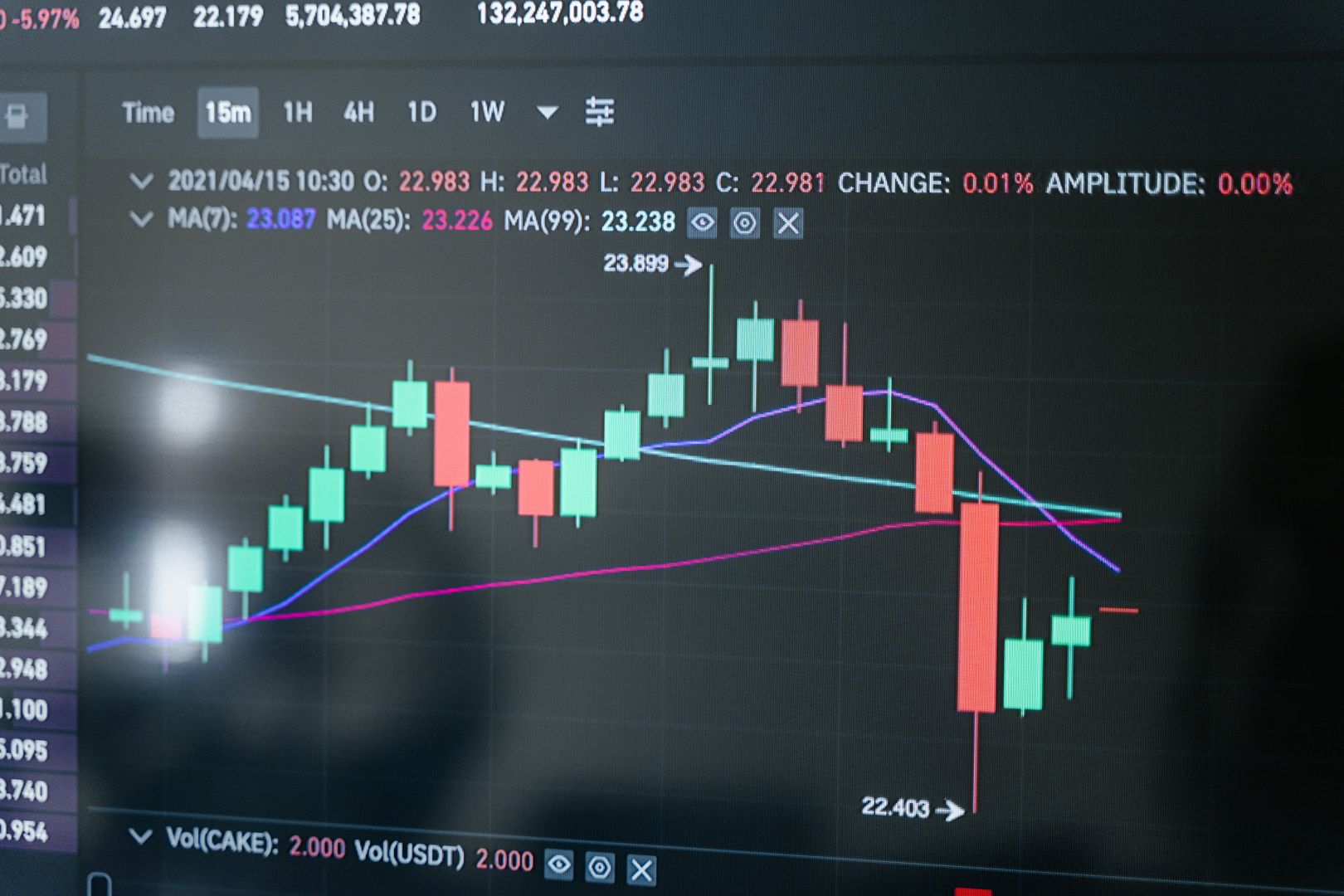
A market data screen on July 21, 2026 highlighted the category's split personality: equity-style tickers and intraday trading on one side, and commodity-style single-asset exposure—plus custody, network, and protocol risks—on the other.

That tension is why sponsors' disclosures repeatedly emphasize that these products can be highly volatile and may not match the experience of holding cryptocurrency directly. The wrapper simplifies operational friction but does not eliminate the underlying asset's price dynamics or the network's technical dependencies.

For investors evaluating ETFs for crypto, the staking dimension adds a layer of complexity: understanding how rewards accrue, whether they are automatically reinvested or distributed, and how the issuer handles validator selection and operational oversight becomes part of the research checklist.

Professional man using tablet in front of cryptocurrency trading screen indoors.

The U.S. market includes spot Bitcoin and spot Ether products that began trading after SEC approvals in 2024, plus newer single-asset listings that extend the ETF wrapper beyond the two largest tokens. Size and liquidity concentrate quickly in a small set of tickers, which matters for execution and tracking. Scale dynamics translate into tighter spreads and deeper order books, though spreads can widen sharply during crypto volatility or when U.S. markets are closed and crypto continues trading elsewhere.

Regulatory Evolution and Product Structures

Understanding the legal frameworks that govern spot crypto ETFs

Many offerings are legally structured as exchange-traded products or trusts rather than '40 Act funds, which affects disclosures and investor protections. The SEC's January 10, 2024 approval of rule changes allowing spot Bitcoin exchange-traded products to list and trade marked a watershed moment for U.S. digital asset regulation.

That decision made coin ETF exposure functionally similar to buying a stock: investors can route orders through standard brokers, use limit orders, and hold positions alongside equities and bonds, even in certain tax-advantaged accounts where permitted by the broker and plan rules. Spot Ether products followed with spot Ethereum ETFs beginning U.S. exchange trading on July 23, 2024 after exchange approvals earlier that year.

The practical difference versus direct coin ownership is market access and custody: shares can be bought and sold intraday, but investors do not receive the underlying token, do not interact with smart contracts, and generally cannot transfer out to a wallet. This regulatory wrapper provides investor familiarity and ease of access but introduces its own set of disclosure requirements and operational dependencies.

Disclaimer This material is for informational purposes only and is not investment, legal, or tax advice. Digital assets and cryptocurrency ETFs can be highly volatile, and investors can lose their entire investment. Consult with qualified professionals before making investment decisions.
mm

Alex Morgan

Writer

Market analyst covering Bitcoin, Ethereum, and altcoin price action with technical and on-chain analysis. Delivers data-driven insights without speculation or price prediction hype.