

Skip to content

Daily Crypto Breaking News Roundup

mm Marcus Chen 5 min read

Breaking News Summary

Key Takeaways

  1. Bitcoin traded around $66,300 with resilience despite heavy regulatory news; ether near $1,930 in orderly spot markets.

  2. BIS study found stablecoins largely unaffected by capital controls, with USD stablecoin supply rising from $253 billion to $292.6 billion year-over-year.

  3. DOJ recovered over $25 million in cryptocurrency from fraud schemes; one investigation traced more than 270 suspected victim transactions.

  4. Russia passed legislation capping non-qualified retail investors at 300,000 rubles annually per intermediary, with provisions expected September 1.

  5. Pakistan established a cryptocurrency investigation unit under its National Command and Control Centre to probe money laundering and terrorism financing.

Market Positioning and Institutional Flows

Bitcoin remained little changed around the $66,300 level in early trading on July 22, 2026, as risk sentiment tracked a rally in global semiconductor equities and renewed attention on currency stress following the Japanese yen's slide to its weakest level since 1986. Ether traded around $1,930 during the same window.

The key point in today's update was resilience rather than momentum. Spot markets stayed orderly despite a heavy regulatory news tape that included enforcement actions, sanctions warnings, and new retail trading caps in multiple jurisdictions.

U.S. spot Bitcoin ETFs have continued to function as a high-frequency sentiment gauge for institutional positioning. Earlier in July, data tracked by SoSoValue showed a sharp swing from a roughly $425 million outflow day to a subsequent session of about $181 million of net inflows.

Total spot Bitcoin ETF assets rebounded toward roughly $78 billion in that reporting period. Ether funds also recorded inflows in the same stretch, with ether ETF assets crossing $10 billion in the same window, signaling continued institutional appetite for digital asset exposure.

Market participants in the U.S., Europe, and Asia were parsing fresh signals on stablecoins, sanctions screening, and retail trading rules as macro cross-currents, rather than token-specific catalysts, drove most of the price action on July 22.

Stablecoins Bypass Capital Controls

BIS study highlights emerging-market dollar liquidity channels through USD-backed tokens

Stablecoin Policy Catalyst

A separate policy-driven catalyst came from the Bank for International Settlements, which said dollar-backed stablecoins appear largely unaffected by capital controls in a study spanning flows across more than 130 economies.

The BIS warned that foreign exchange restrictions and capital controls may be less effective against stablecoins than against foreign currency bank deposits, particularly in emerging markets where stablecoins can provide a new channel to access U.S. dollar liquidity.

The BIS-linked data referenced in coverage put total USD stablecoin supply at $292.6 billion as of Tuesday, up from $253 billion a year earlier. This growth underscores the increasing adoption of stablecoins as a parallel financial infrastructure that operates outside traditional banking channels.

The study's findings have implications for monetary policy in jurisdictions that rely on capital controls to manage currency stability and cross-border flows, suggesting that regulators may need new tools to monitor and govern stablecoin circulation.

A price chart snapshot of Bitcoin consolidating near $66,300 captured the day's tone: macro-led stability, not reflexive risk-on.

Fast-Scan Watchlist

  • Bitcoin steady near $66,300; ether around $1,930
  • BIS flags stablecoins bypassing capital controls
  • DOJ seeks forfeiture of over $25 million in fraud cases
  • TRM details HTX wallet rotation across TRON, Ethereum, BNB, Solana
  • Russia sets 300,000-ruble retail cap effective September 1
  • Pakistan forms crypto investigation unit under National Command Centre
  • Illinois faces lawsuit over 0.2% digital-asset transaction tax
  • Clarity Act negotiations continue with new ethics language signed

Enforcement and Sanctions Screening

DOJ recoveries and HTX wallet rotation challenge traditional compliance architectures

Justice Department Forfeiture Actions

On the enforcement side, the U.S. Attorney's Office for the District of Columbia filed five civil forfeiture complaints seeking more than $25 million in cryptocurrency recovered from international fraud schemes targeting U.S. and Canadian residents.

The Justice Department said the recoveries are part of a broader effort that it described as having recovered more than $800 million through the Scam Center Strike Force. One investigation traced more than 270 suspected victim transactions and sought roughly $10.4 million.

A second case tied to online romance scams sought about $12.1 million. These actions reflect an intensifying focus on cross-border cryptocurrency fraud and the development of specialized task forces within federal law enforcement to trace and recover digital assets.

In sanctions and surveillance developments, TRM Labs reported that HTX has been rotating hot wallets and funding addresses across TRON, Ethereum, BNB Smart Chain, and Solana on regular cycles, retiring addresses every few hours.

The firm argued the behavior makes static, address-based sanctions screening less effective and recommended behavior-based attribution as an alternative. UK authorities sanctioned Huobi Global S.A., now HTX, in May 2026 for its alleged role in facilitating Russian sanctions evasion.

HTX said the activity described reflects routine, security-driven operations. The divergence in interpretation highlights the technical and policy challenges of applying traditional sanctions frameworks to decentralized and pseudonymous blockchain networks.

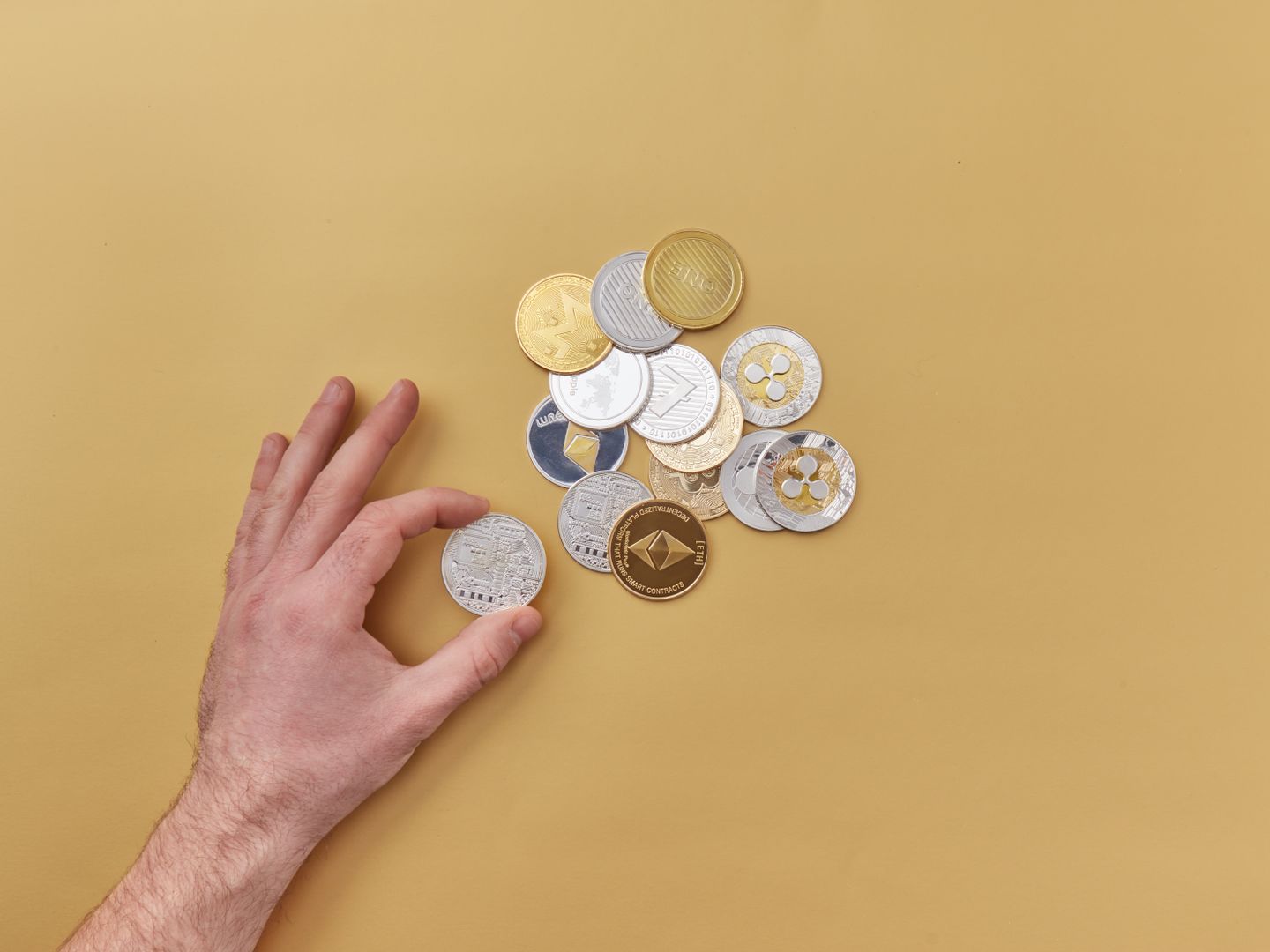
A hand picks cryptocurrencies from a mix of gold and silver coins on a vibrant yellow background.

Outside the U.S., Russia's State Duma passed legislation to bring digital asset trading under government oversight while opening the market to retail investors. Under the rules described in state media coverage, non-qualified investors face an annual purchase limit of 300,000 rubles, about $3,900, per intermediary, while domestic crypto payments remain banned even as foreign-trade settlements are permitted. The measure still needed approval from Russia's Federation Council and signature by President Vladimir Putin, with most provisions expected to take effect on September 1. Pakistan also moved on digital-asset policing, with its Federal Investigation Agency establishing a cryptocurrency investigation unit under its National Command and Control Centre.

U.S. Policy Developments

Clarity Act negotiations and state-level tax challenges shape domestic crypto regulatory landscape

Federal and State Policy

In U.S. policy, negotiations over the Clarity Act stayed in focus after reports that newly approved ethics language signed by President Donald Trump would prohibit federal officials from issuing cryptocurrencies and would put the Justice Department, rather than state attorneys general, in charge of enforcing the provision.

Separately, the SEC's Crypto Task Force—led by Commissioner Hester Peirce—has continued publishing meeting logs and written inputs as part of its stated goal of clarifying how federal securities laws apply to crypto assets and related transactions.

A domestic state-level fight also escalated: The Digital Chamber filed a complaint in an Illinois circuit court challenging a 0.2% tax on digital asset transactions passed as part of the state's FY2027 budget planning and signed by Governor J.B. Pritzker.

The group argued the measure unlawfully singles out digital assets based on the technology used to record or settle ownership, and it asked the court to declare the law void and unenforceable. The tax is scheduled to take effect in January 2027.

The lawsuit represents a broader tension between state governments seeking to capture revenue from cryptocurrency activity and industry groups arguing that technology-specific taxes constitute discriminatory treatment that stifles innovation and violates constitutional principles of equal treatment under the law.

Cryptocurrency breaking news on July 22, 2026 centered on Bitcoin holding near $66,300 while regulators and law enforcement pushed new actions that could reshape liquidity, compliance, and exchange access. Market participants in the U.S., Europe, and Asia were parsing fresh signals on stablecoins, sanctions screening, and retail trading rules as macro cross-currents drove most of the price action.

Ethereum-specific headlines were quieter, but protocol context still matters for network capacity and validator economics. Ethereum's Pectra network upgrade activated on mainnet on May 7, 2025 at 10:05 UTC, following Dencun and combining execution- and consensus-layer changes under the Prague and Electra specifications. The Ethereum Foundation's 2026 protocol priorities update also framed subsequent work—after Pectra and Fusaka—around scaling and data availability improvements that reduce bandwidth demands for validators.

For fast-scanning cryptocoins news, the watchlist stayed tight: Bitcoin steady near $66,300; ether around $1,930; BIS flags stablecoins bypassing capital controls; DOJ seeks forfeiture of over $25 million; TRM details HTX wallet rotation; Russia sets a 300,000-ruble retail cap; Pakistan forms a crypto investigation unit; Illinois faces a lawsuit over a 0.2% digital-asset transaction tax.

mm

Marcus Chen

Writer

Former financial reporter with a decade covering cryptocurrency markets and blockchain policy. Leads CryptoSignal's editorial team with a focus on accuracy and cutting through industry hype.